Powai’s Shilpkar Legacy: Chandan Chittaranjan Sharma and a Tradition of Civic Leadership

Powai | BMC Elections 2026 | Ward 122
As the Brihanmumbai Municipal Corporation (BMC) elections 2026 approach, political activity in Ward 122, Powai has begun to gain momentum. Among the familiar names resurfacing in local discussions is Chandan Chittaranjan Sharma, whose candidature has drawn attention due to his long-standing association with Powai’s civic and political landscape.
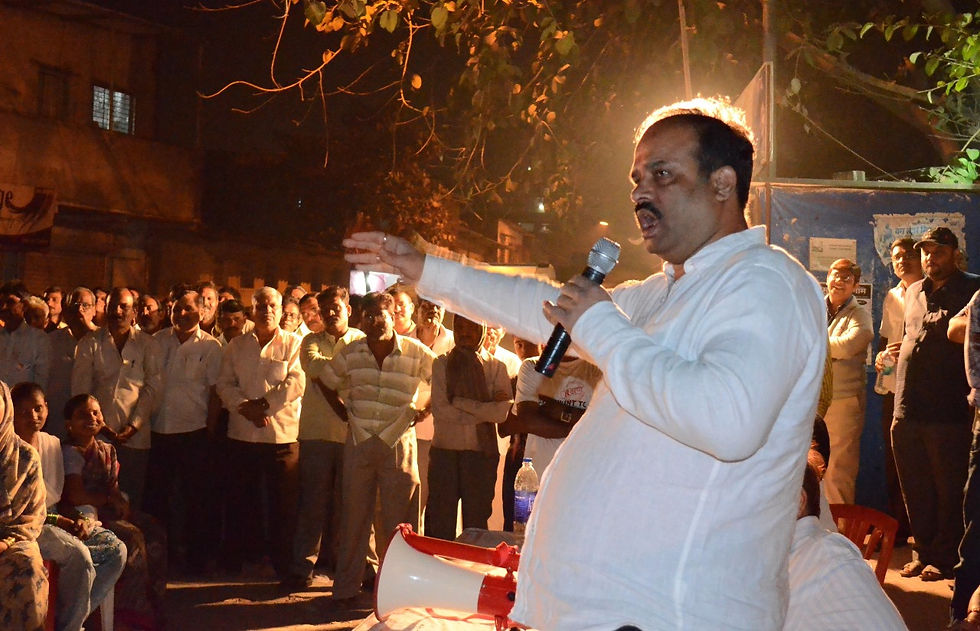
The upcoming election is being contested amid persistent civic challenges, environmental concerns, and an ongoing debate over the role of experience and continuity in municipal governance. In this context, Sharma’s name has re-entered public focus largely because of his family’s historical contribution and his own two-decade-long municipal career.
From Forest Land to Urban Township: Powai’s Early Development
Powai’s journey from a forest-dominated area to a planned residential and institutional township was shaped during the early phases of Mumbai’s suburban expansion. Chittaranjan Sharma, father of Chandan Sharma, played a notable role during this transition. At a time when dense forest cover defined much of Powai, he supported the development of residential layouts, encouraged settlement, and helped
facilitate basic civic infrastructure.

His efforts contributed to enabling thousands of families to establish homes in Powai, gradually transforming the area into an organised urban neighbourhood. His work later received recognition, including being honoured by Prime Minister Narendra Modi during his tenure as Chief Minister.
Freedom Movement Roots and IIT Bombay’s Foundation
The family’s civic association with Powai dates back further to Chandrabhan Sharma, a freedom fighter whose emphasis on education influenced the area’s long-term development. His contribution of land for the establishment of IIT Bombay proved to be a defining moment for Powai.
Today, IIT Bombay has given Powai global recognition, positioning it as an international centre for education, research, and innovation. The institution has also played a key role in generating employment opportunities and shaping Powai’s identity on the global map.

Four-Term Corporator and Urban Challenges
Chandan Chittaranjan Sharma’s political career spans over 20 years within the Municipal Corporation of Greater Mumbai (MCGM). He served four terms as a corporator between 1997 and 2017, a period marked by rapid urbanisation and population growth in Powai.
This expansion placed increasing pressure on essential civic services such as water supply, sanitation, healthcare, and public infrastructure. One of the most pressing issues during this period was water scarcity, particularly in Powai’s hilly areas where residents depended heavily on wells.
Sustained civic pressure and resident protests eventually led to administrative action, resulting in the installation of a 48-inch water pipeline and the construction of a 10-lakh-litre water storage tank, significantly improving water availability in affected areas.
Strengthening Health and Sanitation Services
Municipal health infrastructure also expanded during Sharma’s tenure. Powai saw the introduction of a 24-hour free ambulance service and its first free mortuary van, improving emergency medical response.
Regular health check-up and eye camps, along with annual blood donation drives, were organised across neighbourhoods. Sanitation drives and the construction of public toilets in densely populated areas formed part of broader public health initiatives aimed at improving living conditions.
Save Powai Lake and Environmental Advocacy
Environmental protection, particularly concerning Powai Lake, remained a recurring theme in Sharma’s civic engagement. Since 1997, he has been associated with sustained public efforts under the #SavePowaiLake movement, highlighting issues such as pollution, encroachments, and the unchecked spread of water hyacinth.
He participated in public agitations, maintained regular engagement with civic authorities, and followed up with the BMC regarding the lake’s deteriorating condition. His involvement also extended to beautification initiatives and the development of public infrastructure around Powai Lake.

To reduce environmental stress during festivals, regulated Ganesh Visarjan ghats were later developed to manage immersion activities more systematically. Despite these measures, Sharma has continued to emphasise the need for further intervention to protect the lake’s ecological balance.
Livelihood Issues and Pandemic Support
Civic advocacy also included livelihood-related concerns. Sharma opposed the displacement of street vendors during road-widening projects, arguing that infrastructure development should not undermine livelihoods.
During the COVID-19 pandemic, he remained active at the local level, coordinating sanitation efforts and supporting relief initiatives, including food distribution for residents affected by prolonged lockdowns and economic disruption.

Community Engagement and Social Initiatives
Alongside formal municipal responsibilities, community engagement remained a consistent aspect of his public life. For over three decades, food distribution during Ganesh Visarjan has been organised for devotees. Events such as Powai Mahotsav provided platforms for cultural and sports activities, while plantation drives and the establishment of a Senior Citizens’ Office reflected efforts toward social inclusion.

Ward 122 and the Question of Continuity
As the BMC elections draw closer, Sharma’s campaign narrative remains largely anchored in his past municipal record rather than forward-looking promises alone. Voters in Ward 122, Powai, are evaluating his experience, long association with the area, and continued engagement with civic and environmental issues amid a rapidly changing urban landscape.
In Powai, the upcoming election has become a broader reflection on civic history, environmental priorities, and the role of sustained local leadership in shaping municipal governance.